
+44 1252 624411 info@liquid-lamination.co.uk Water-based and UV liquid laminates · Inkjet sprays · Coating machines
Guide
A liquid laminate gives a print a washable surface, but how that surface is cleaned decides how long it keeps looking right. Gentle, regular cleaning with the right cloth and cleaner protects the coating; harsh products and scrubbing can wear it away. This guide sets out a sensible care routine for coated graphics indoors, outdoors and on vehicles.
A coating can feel dry well before it reaches its final resistance. Water-based liquid laminates need enough drying and curing time before they are packed, installed or wiped, and temperature, airflow, humidity and coating thickness all affect how long that takes. UV-curable coatings cure under the lamp, but only if lamp output, line speed and coat weight are right.
Putting a newly coated graphic into a demanding cleaning routine too soon can cause failures that are really down to incomplete cure. Check the product data sheet for cure guidance and pass it on to whoever is installing or maintaining the work. Our guide to drying and curing liquid laminates explains the difference in more detail.
Landor’s own FAQ recommends a simple starting point for liquid-laminated graphics:
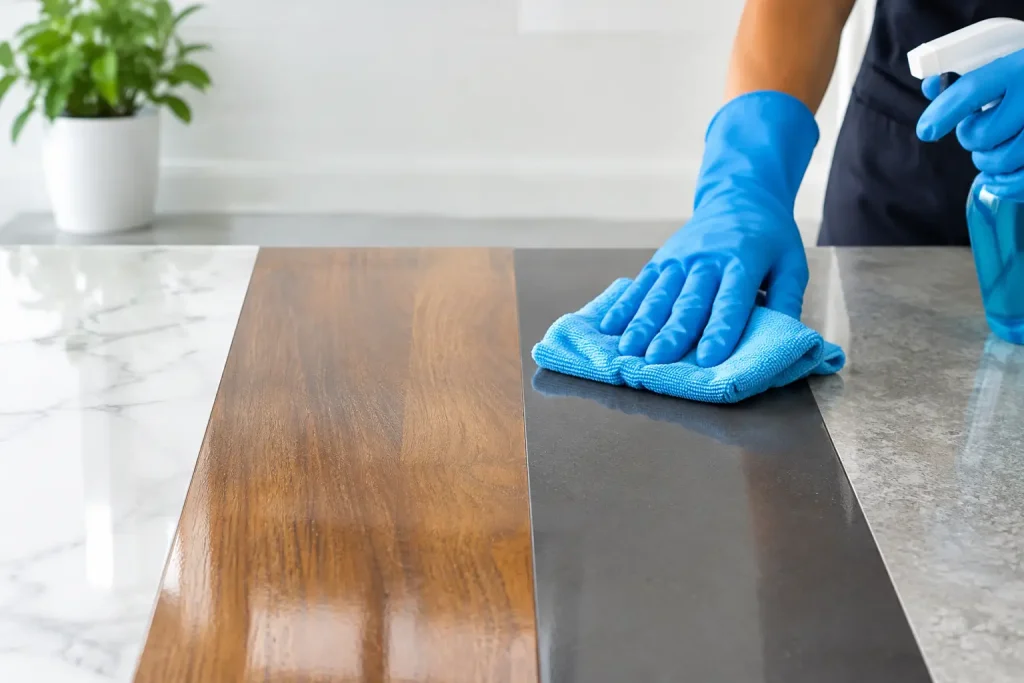
Wipe with light, even pressure rather than scrubbing. Abrasive pads and heavy rubbing can damage the liquid lamination and leave the surface more porous, so that dirt builds up more easily afterwards.

All printed and coated graphics benefit from regular cleaning. Dirt left to build up over time can work its way into the surface, just as it does with film laminates. This matters most for exterior signs, hoardings and vehicle graphics, which collect road film, pollution and weather residue.
For vehicles and fleet livery, avoid aggressive car washes. A gentle hand wash with a mild cleaner is kinder to the coating than high-pressure brushes. Pay attention to edges, seams and cut-outs, where cleaning fluid can collect, and avoid leaving liquid pooled at joins.
In clinics, schools, gyms and public venues, coated graphics may be disinfected many times a day. “Disinfectant” covers a wide range of chemistries, including alcohol-based products, quaternary ammonium compounds, hydrogen peroxide and chlorine-based cleaners, and they do not all affect coatings in the same way. Concentration, contact time and cleaning frequency all change the outcome.
Anti-microbial coatings such as ColourShield Safetouch do not replace routine cleaning. Landor’s anti-microbial coatings are tested to ISO 22196, but chemical resistance and anti-microbial performance are separate properties. See Do coatings resist disinfectants? for what to check before specifying.

Gloss, satin and matt describe how a surface looks, not how chemically resistant it is, but they do change how cleaning shows. Landor notes that its gloss liquid laminates give the best abrasion resistance, satin still gives good abrasion resistance with less glare, and matt may show some abrasion marks while still preserving the print.
Matt surfaces deserve the gentlest treatment. Aggressive scrubbing can burnish a low-sheen finish, leaving a polished patch even when the coating itself is intact. Wallpaper Matt and other low-sheen coatings are designed to give a wipe-clean surface, so a soft cloth and a light touch are usually all that is needed. For more on choosing between finishes, see gloss, satin or matt.
Vague advice such as “wipe clean” is a common cause of damage. When you hand over a coated job, give the facilities or cleaning team a short written note that states:
A clear note protects the client’s investment and gives the cleaning team a surface they can maintain with confidence.
Start with a soft cloth or sponge and warm water with a mild detergent. Test a small area first and avoid strong chemicals and abrasive scrubbing. For canvas, water alone is usually enough.
Landor advises avoiding aggressive car washes. Regular, gentle hand washing helps stop dirt building up without wearing the coating.
Heavy rubbing can burnish a low-sheen surface. Use lighter pressure and a soft, non-abrasive cloth, and make sure cleaning staff know that matt finishes need a gentle touch.
No. An anti-microbial coating is designed to support hygiene, not replace routine cleaning. Keep to the site’s normal cleaning protocol.
Call +44 1252 624411 or email info@liquid-lamination.co.uk for advice, samples and pricing.
