
+44 1252 624411 info@liquid-lamination.co.uk Water-based and UV liquid laminates · Inkjet sprays · Coating machines
Guide
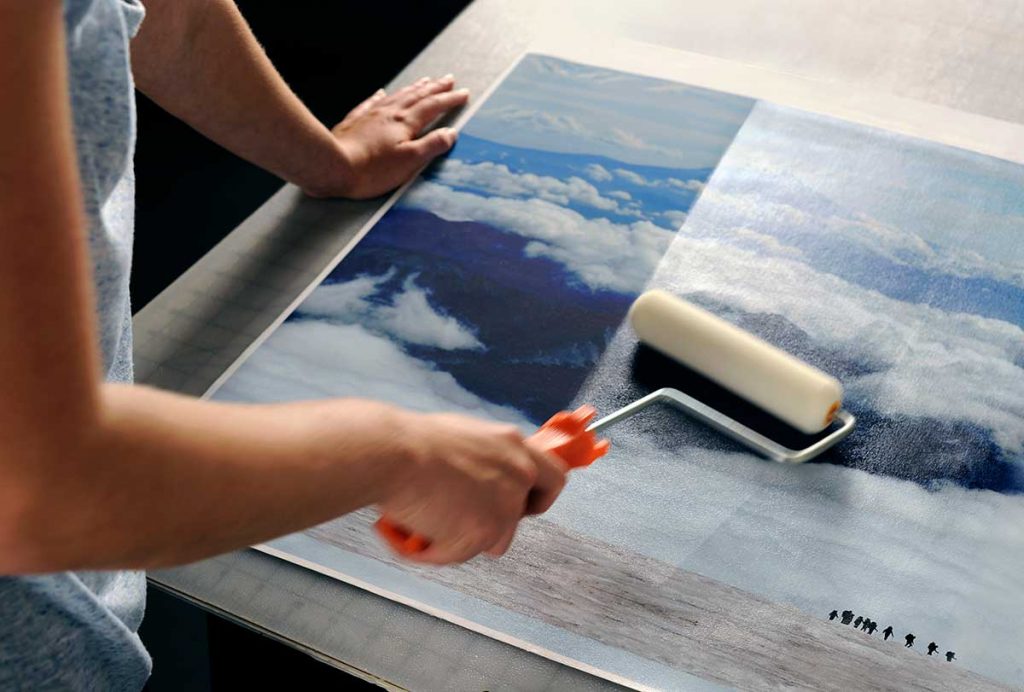
A hand roller is the simplest way to apply a liquid laminate, and it needs no capital equipment. Done well, it gives an even, self-levelled finish on canvas, banners, wallcoverings and many other water-resistant prints. This guide walks through the method Landor recommends for its water-based coatings.
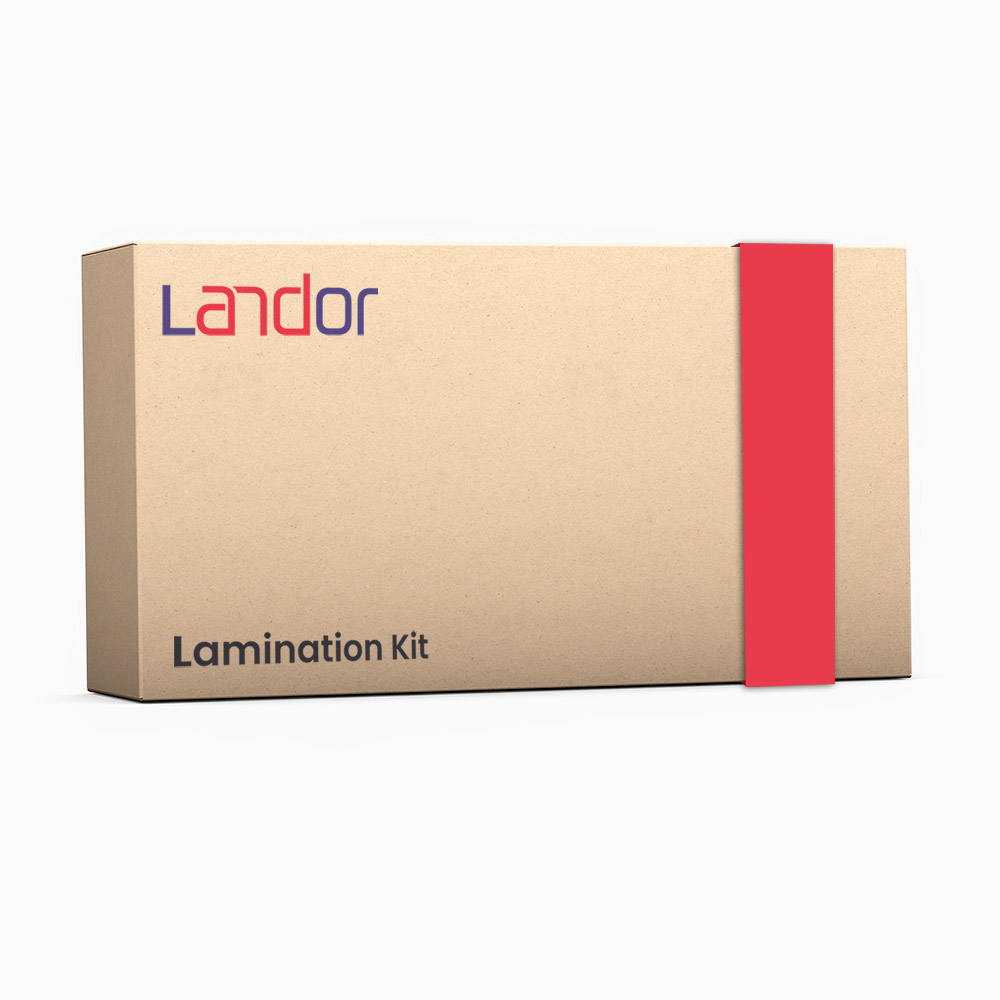
If you are new to coating, Landor’s starter kit includes 100ml of the liquid laminate of your choice, a roller tray and a high-density foam roller and handle, or an optional foam brush. It is intended for testing your own media and inks before a production run.
Check that the print is fully dry and has outgassed as the ink supplier recommends, and that the ink and media are water resistant. Water-sensitive prints and most papers need a solvent-based product instead. Bring both the coating and the print to room temperature; Landor advises curing at ideally no lower than 15°C, with better results at around 18°C.
Stir the coating well before first use, especially satin and matt versions, because the matting agents must be thoroughly mixed. Do not shake the container, as this introduces bubbles that can transfer to the print. Lay the print flat and fully supported, or work on a firmly fixed vertical surface.
Two thin coats generally give a better-looking finish than one saturated coat. Provided you apply enough fluid, the coating self-levels as the roller leaves the surface, so roller edges should not leave lines.
On canvas, use light passes rather than pressing into the weave; too much pressure forces coating unevenly into the texture and can leave roller lines. Landor recommends coating canvas before it goes on the stretcher frame and leaving it to cure for 24 hours before stretching. Canvas coatings are designed to stay flexible so the ink does not crack when the canvas is tensioned.

There is no size limit for hand coating: if a graphic can be laid on the floor or hung on a wall, it can be rolled. Coating on a vertical surface has the added benefit of reducing the chance of dust settling on the wet film. For very large flat areas, Landor’s LL range can also be spread with a mop applicator, such as a lambswool window-washing head on a dowel, by pouring the coating in lines and spreading it evenly. CSX5000 may need slight thinning with water when used this way.
Note that Landor’s anti-graffiti coating is applied as a single coat only, so the two-coat method above does not apply to it.
Water-based Landor laminates clean up with soap and water, so wash rollers and trays before the coating dries on them. Once the print is dry, inspect it in normal and angled light for missed areas, streaks, trapped dust and edge pooling. Do not stack or wrap the work until the coating has reached full cure; check the product data sheet for timings under your conditions.
A high-density foam roller, or a short-nap roller with a nap no deeper than 3/16 inch. Landor’s starter kit includes a high-density foam roller and handle.
For ClearShield Type C, Landor gives about 30 minutes to 1 hour for the first coat to become touch-dry. Other products and conditions vary, so check the data sheet.
Shaking the container is a common cause. Stir the coating gently but thoroughly instead, and avoid overworking the surface once it starts to dry.
Landor lists the starter kit at £25.00 plus postage, packing and VAT, for mainland UK delivery. Overseas prices are quoted on request.
Call +44 1252 624411 or email info@liquid-lamination.co.uk for advice, samples and pricing.
