
+44 1252 624411 info@liquid-lamination.co.uk Water-based and UV liquid laminates · Inkjet sprays · Coating machines
Guide
Most liquid laminate faults have ordinary causes: a coating that was shaken rather than stirred, a print that was not quite ready, a room that was too cold or a coat that was too heavy. This troubleshooting guide groups the problems print producers see most often, with the likely causes and what to change next time. When in doubt, coat a test panel before the real job.
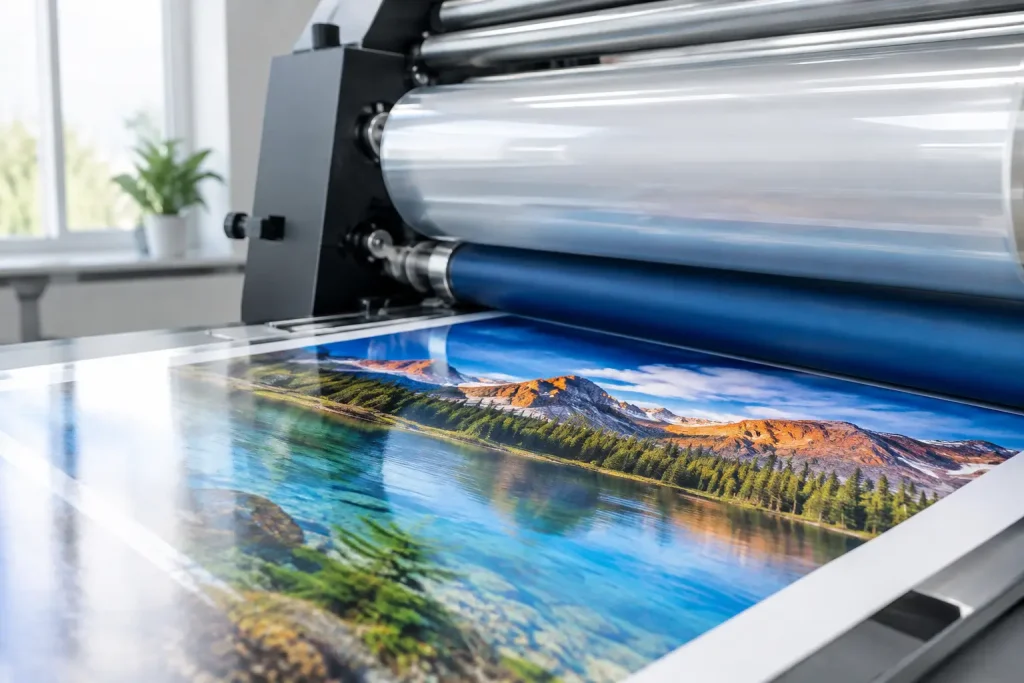
Likely causes: shaking the container, overworking the coating with the roller, or loading a roller from a tray too aggressively.
What to do: stir coatings gently but thoroughly instead of shaking them. Landor warns that shaking can cause unwanted bubbles, particularly in drier working conditions. Apply in steady passes and avoid going back over an area as it starts to dry, since overworking can create foaming and gloss variation. Coating aerosols such as ClearJet are designed to spray clear and bubble-free, so check spray distance and technique if bubbles appear with a can.
Likely causes: too little fluid on the roller, a dry edge forming, tray ridges transferring to the print, or matting agents not mixed in.
What to do:
On machines, streaks, puddling and dry bands point to coat weight or head settings. See setting up a roll-to-roll liquid laminator.
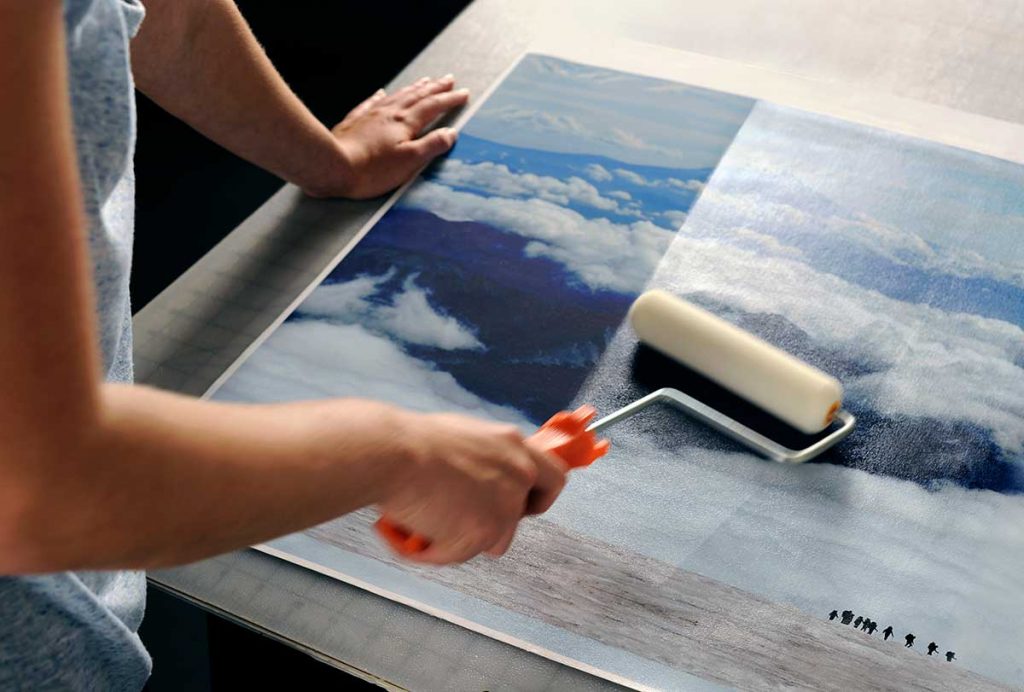
Likely causes: the coating not wetting out on the surface, contamination, or a coat that is too thin for a textured substrate.
What to do: remove dust with a lint-free method and avoid household cleaners or silicone-based polishes, which can interfere with wetting and adhesion. On canvas, use a coating formulated for it: Landor’s canvas coatings are designed to reduce the pinholes that can appear on water-resistant inkjet canvas. A second thin coat, after the first is touch-dry, helps close gaps.
Likely causes: ink not fully cured or outgassed, an incompatible ink and coating, a difficult low-energy surface, or a cold room.
What to do:
If you want help checking adhesion on a new ink and media combination, see the Landor cross-hatch adhesion test page.
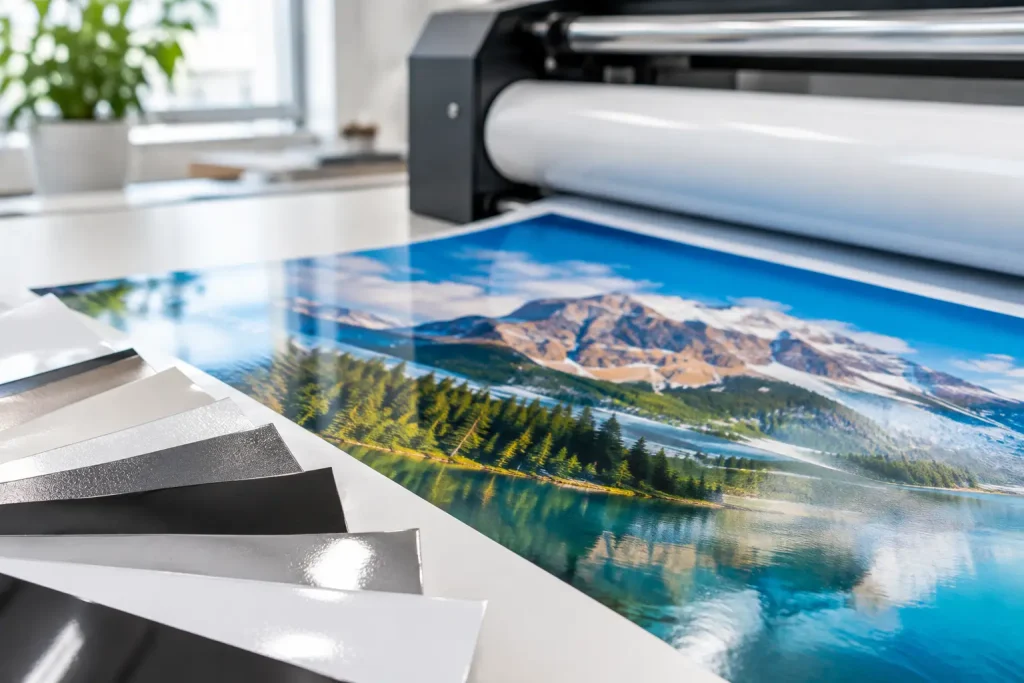
Likely causes: stacking, rolling or wrapping work before the coating has fully cured.
What to do: dry to the touch is not the same as cured. Give work the full cure time on the data sheet before stacking or packing, store it flat or upright with separation, and only use interleaving once the surface has cured. On a coating line, make sure work is properly dry before it reaches the take-up roll. More in drying and curing liquid laminates.
The most common cause is coating a print that still holds solvent or moisture. Let the ink fully dry and outgas, and check the coating suits the ink type.
Only within the manufacturer’s limits. For ClearShield Type C, Landor allows up to 10% thinning for spraying, tested in small steps, and warns that thinning reduces gloss and protection.
Generally not. Heavy coats can run, pool, dry slowly and crack. Landor recommends two thin coats for a better finish.
UV inks and rigid boards can have poor surface tension. Landor may recommend a primer or a coating that doubles as a primer. Test first, or ask Landor to test for you.
Call +44 1252 624411 or email info@liquid-lamination.co.uk for advice, samples and pricing.
