
+44 1252 624411 info@liquid-lamination.co.uk Water-based and UV liquid laminates · Inkjet sprays · Coating machines
Guide
The sheen of a coating changes how a print looks and how it wears. Gloss, satin and matt are not just a style preference: they affect colour depth, glare, how marks show and how the surface should be cleaned. This guide sets out the trade-offs so you can choose with the end use in mind.
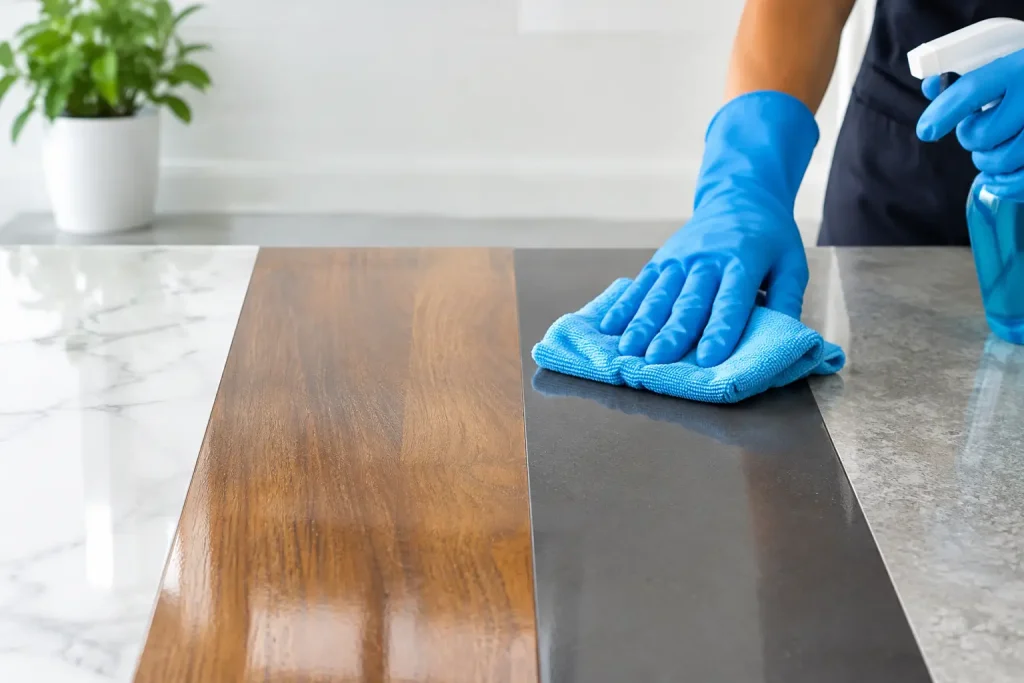
Some product ranges use different names. ClearJet FA, for example, is offered in gloss, semi-gloss and low gloss, where low gloss means matt.
For high-traffic graphics, Landor’s guidance is that gloss versions give the best abrasion resistance, along with water, UV and chemical resistance. Satin still gives good abrasion resistance where glare must be avoided. Matt preserves the print but may show some abrasion marks. This is why Landor recommends gloss for inflatables and soft play, where abrasion is constant.
Chemical resistance is a different matter. As Landor’s article on which finish resists cleaning chemicals explains, resistance comes mainly from the coating chemistry and how well it has cured, not from the sheen. Specify the performance first, then pick the finish for the look.
Matt is frequently chosen to keep reflections down on large walls. Landor’s Wallpaper Matt is designed for inkjet wallcoverings, with Wallpaper Satin and Gloss available too. Satin is a practical choice where the wall will be wiped often.
Let the artwork lead. A muted reproduction may need a low-sheen surface, while a photographic canvas with rich blacks may suit a more enhancing finish. Landor canvas coatings come in gloss, satin and matt.
Gloss is common where visual impact and easy wipe-down matter. Satin can help legibility under bright or angled lighting.

Anti-graffiti. Landor’s anti-graffiti liquid laminate is available in gloss. Applying a matt protective coat underneath can soften the shine, but does not guarantee a satin or matt result.
UV-curable coatings. Landor’s UV-curable range is typically offered in gloss or matt, for example the Marashield RG and RM coatings for rigid materials.
Spraying. If you thin a water-based coating for an HVLP gun, the gloss level drops as you add water, so test any thinning on a sample.
Extra coats. Additional coats can alter the sheen and feel, so judge the final appearance on a test panel rather than the first coat.
Satin and matt coatings contain matting agents that must be stirred thoroughly before use; poorly mixed product is a common cause of patchy sheen. Do not shake, as this introduces bubbles. Keep coat weight even across the whole graphic, because uneven application shows up as variable gloss, especially under raking light on multi-panel work.
Above all, agree the finish with the client using a coated sample on the actual printed substrate. Textured papers, canvas and dark solid areas show changes in surface appearance most clearly.
Work through these questions in order, and let the answers narrow the choice:
If the answers conflict, coat sample strips in two finishes and let the client compare them in place.
For abrasion, Landor’s gloss coatings give the best resistance, and matt may show some abrasion marks. Chemical resistance, however, depends mainly on the coating chemistry and cure rather than the sheen.
Matt is the most common choice because it reduces glare. Landor’s Wallpaper Matt is designed for this, with Satin and Gloss versions available.
Landor’s anti-graffiti coating is available in gloss. A matt coat beneath it can soften the shine, but a true matt or satin result is not guaranteed.
Often because the matting agents were not fully mixed, or the coat weight varied. Stir thoroughly and apply evenly. The fixing coating problems guide covers this in more detail.
Call +44 1252 624411 or email info@liquid-lamination.co.uk for advice, samples and pricing.
