
+44 1252 624411 info@liquid-lamination.co.uk Water-based and UV liquid laminates · Inkjet sprays · Coating machines
Applications
The reception wall is often the first thing a visitor sees and the surface a brand team cares about most. It is also where bags, chairs, fingers, cleaning products and sunlight through the entrance glazing meet the print. A liquid laminate helps a brand wall keep its colour and finish without covering it in a separate plastic film.
Damage to reception graphics tends to build gradually rather than arrive all at once. Repeated touching can polish or mark the surface, furniture scuffs the lower wall, and hand sanitiser splashes and detergent residues are wiped off day after day. Near glazed entrances and atria, UV exposure can also shift colour over time.
Because a brand wall carries exact corporate colours, a faded or patchy surface is more than a cosmetic issue. Replacing it means reprinting, colour matching and closing off a busy area, so building protection into the original specification is usually the more sensible choice.
Wear is rarely even. The strip beside the desk, the wall behind visitor seating and the area around a door handle take far more contact than the upper wall. When you sample a coating, test it where it will work hardest, not just in the middle of the design. A liquid coating also avoids the edge lift and trapped contamination that can make film impractical on some wallcoverings and large installations.
These questions, taken from Landor’s guidance on protecting digital wallpaper, turn a vague request for something durable into a specification the printer and installer can work to.
Gloss, satin and matt describe appearance, not chemical resistance, so choose the finish for the look and the coating system for the cleaning regime. Gloss deepens colour and suits bold logo panels, but shows reflections under bright reception lighting. Satin is often the practical middle ground for wall graphics and branded partitions, reducing glare while keeping colour strength. Matt keeps a soft, architectural look but needs careful cleaning, as aggressive rubbing can burnish a low-sheen surface.
Always approve a coated sample on the actual substrate under the reception’s own lighting, because the coating can change how a brand colour reads.
For full-wall graphics, Landor’s Wallpaper Matt, Satin and Gloss coatings are designed for inkjet wallcoverings. Rigid logo and feature panels on materials such as Dibond or Foamex can be protected with water-based coatings or with UV-curable coatings, which are suited to rigid boards.
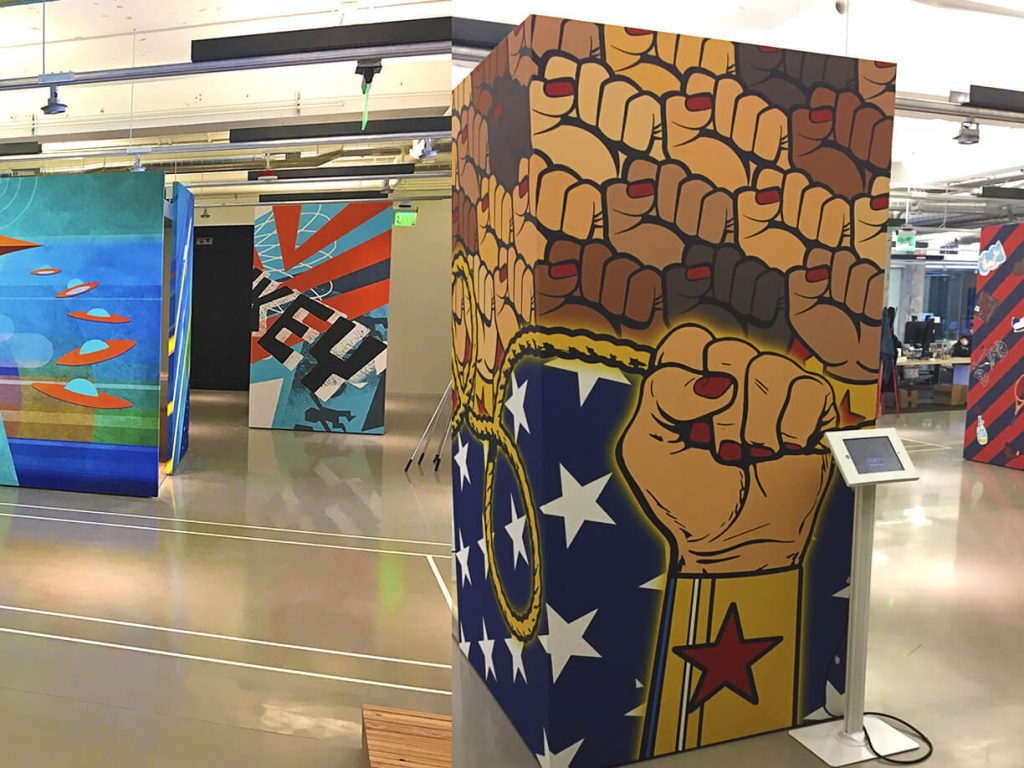
Where the brand wall changes with campaigns or seasons, Phototex self-adhesive fabric is designed to be removed and reapplied without residue. Landor lists boardrooms and receptions, seasonal promotions and temporary branding among its commercial uses. At one stadium, a designer created a display for the reception area using Phototex, and has described being able to fit graphics with little disruption to everyday use of the space.

Reception counters, door push plates and touch-height graphics are handled constantly. Landor’s ColourShield Safetouch anti-microbial coatings are tested to ISO 22196 and are listed for offices and counters, as well as healthcare and retail settings. They are designed to complement normal cleaning and should not replace it. See the anti-microbial coatings page for details.
Give facilities teams specific instructions rather than a vague ‘wipe clean’: the approved cleaner and dilution, the type of cloth and anything to avoid. Test any site disinfectants on a retained sample before they are used across the wall. A brand wall that is cleaned correctly is far more likely to stay on-brand for its full life.
A coating can alter how colour reads, particularly gloss, which deepens colour. Approve a coated sample on the actual substrate under the reception lighting before production.
Satin is often a practical choice because it reduces glare while keeping colour strength. Gloss suits bold logo panels; matt suits a softer look but needs careful cleaning.
Phototex self-adhesive fabric is designed to be removed and reapplied without residue or damage to walls, which makes it suited to graphics that change with campaigns.
It depends on the site. For high-touch counters and push plates, ColourShield Safetouch, tested to ISO 22196, can be specified alongside normal cleaning.
Call +44 1252 624411 or email info@liquid-lamination.co.uk for advice, samples and pricing.
