
+44 1252 624411 info@liquid-lamination.co.uk Water-based and UV liquid laminates · Inkjet sprays · Coating machines
Applications
Graphics on bus shelters, information totems, kiosks and other street furniture are on duty around the clock with nobody watching over them. Rain, sun, traffic pollution, passing hands and the occasional tag all take their toll. Choosing the right coating at print stage makes those panels cheaper to keep presentable over their working life.
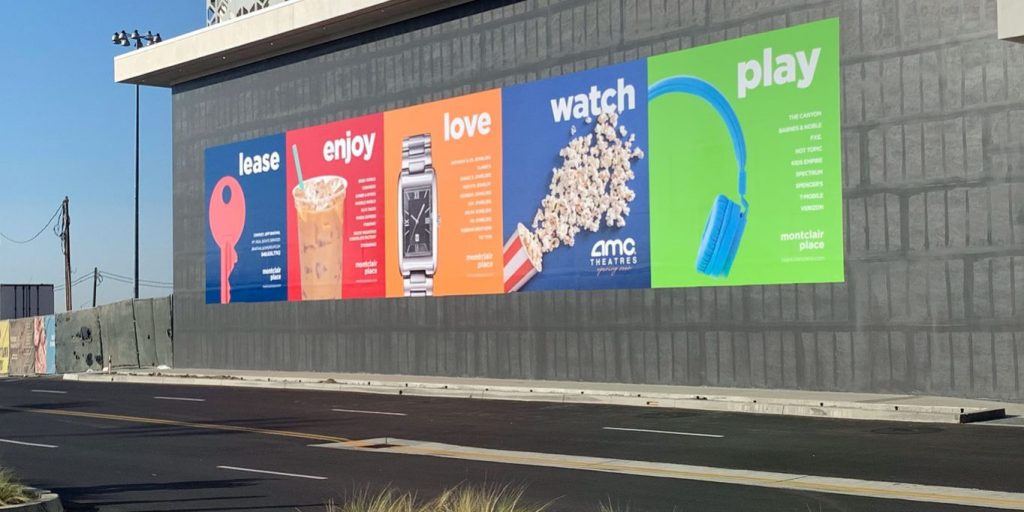
Water, rain, chemicals, pollution, UV light and abrasion from heavy traffic all degrade an outdoor print over time. Street furniture adds the cost of access: replacing a panel means a site visit, labour and often traffic management. Landor’s outdoor sign coatings add a protective layer intended to keep the original artwork vibrant for as long as it is expected to last.
All Landor coatings contain UV inhibitors and provide water and abrasion resistance and resistance to most chemicals. That is the baseline. The questions that follow are about vandalism, substrate and production method.
No coating can stop someone tagging a panel. What a suitable anti-graffiti coating can do is make the graffiti removable without destroying the print underneath. Landor’s anti-graffiti liquid laminate is a two-part water-based coating, supplied in gloss and applied as a single coat. In Landor’s 10-minute spot tests it showed no effect from acetone, toluene, gasoline or 5% ammonia, and withstood more than 200 MEK double rubs.
Landor is clear that it cannot test every pen and paint on the market. For a public-realm contract, apply the likely contaminants to coated test panels, leave them for a realistic time, then clean them with the approved remover and inspect in raking light for ghosting or loss of gloss. Landor also supplies a citrus-based graffiti remover.

Most street furniture graphics are rigid panels or flexible prints mounted behind or on a frame. Landor liquid lamination can be applied to printed ACM panels, PVC, PET and polypropylene sheets, flexible banners and self-adhesive graphics, and direct-to-board UV or latex prints.
Timetable panels, ticket machine surrounds and handrails are touched constantly. Landor lists stations, transport hubs and handrails among the settings for its anti-microbial coatings, which it states are tested to ISO 22196. They are intended to supplement the operator’s cleaning regime, not replace it.
Remember that anti-microbial performance and resistance to cleaning chemicals are separate properties. If the operator disinfects shelter panels on a schedule, ask which product is used, its dilution and how it is applied, then test a fully cured coated sample against it before the contract is rolled out across a network of sites.
A coating performs best when the cleaning crew knows how to treat it. Write the approved cleaner and method into the maintenance contract, and include these basics:
Design choices help too. Replaceable face panels and placing graphics away from habitual tagging spots can reduce how often attacks happen. Coatings are one layer of defence alongside sensible site management.
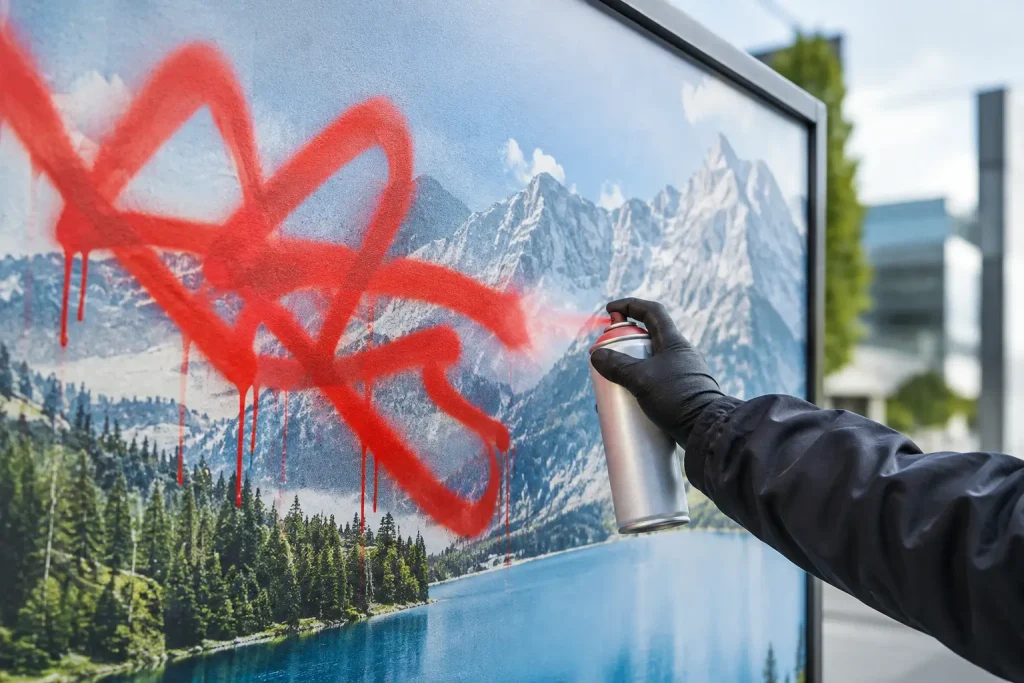
Landor’s anti-graffiti coating is gloss. Applying a matt coat first can soften the shine, although Landor notes this does not guarantee a satin or matt result.
No. It is designed to repel, including further coats, so it is applied once. For a tougher build, use a water-based coating as a primer underneath.
Not always. Deep scratches can cut through the coating, and some paints or removers may stain. Testing with likely contaminants before roll-out gives the most reliable picture.
Yes. Landor’s coating service uses a UV flatbed coater for rigid boards, including outdoor panels and anti-graffiti hoardings.
Call +44 1252 624411 or email info@liquid-lamination.co.uk for advice, samples and pricing.
