
+44 1252 624411 info@liquid-lamination.co.uk Water-based and UV liquid laminates · Inkjet sprays · Coating machines
Applications
PVC banner is one of the few substrates where film lamination is generally not a workable option, so liquid lamination is the usual way to protect it. A clear, self-levelling coat over the print helps shield inks from UV light, rain, pollution and abrasion, and it can be applied with nothing more than a hand roller. This page looks at why banners need a liquid coating, how to choose one and how to apply it at almost any size.

Film laminates do a good job on many prints, but they are not designed to fold, stretch or crease. A banner does all three as it is rolled, transported, tensioned and moved by the wind. Film is also prone to lifting at the edges when exposed to outdoor water, humidity and heat, and it reacts poorly to swings between hot, cold and damp conditions.
A liquid laminate behaves differently. It bonds to the printed surface and stays flexible, moving with the banner rather than fighting it. That is why Landor’s comparison of film lamination and liquid lamination lists PVC banners, flex-face signs, truckside curtains and awnings among the applications where liquid coating is commonly the only protective option.
Modern inks are durable, but outdoor inks and substrates still have limits. On an exposed banner, several factors work on the print at once:
Landor’s experience is that a liquid laminate can roughly double the life of an outdoor print. It is worth being clear about what that means: the improvement is relative to the same banner left unprotected in the same conditions, not a fixed number of years. A faded banner that stays up can do more harm to a brand than one that is replaced on time, so protection is as much about appearance as about lifespan.
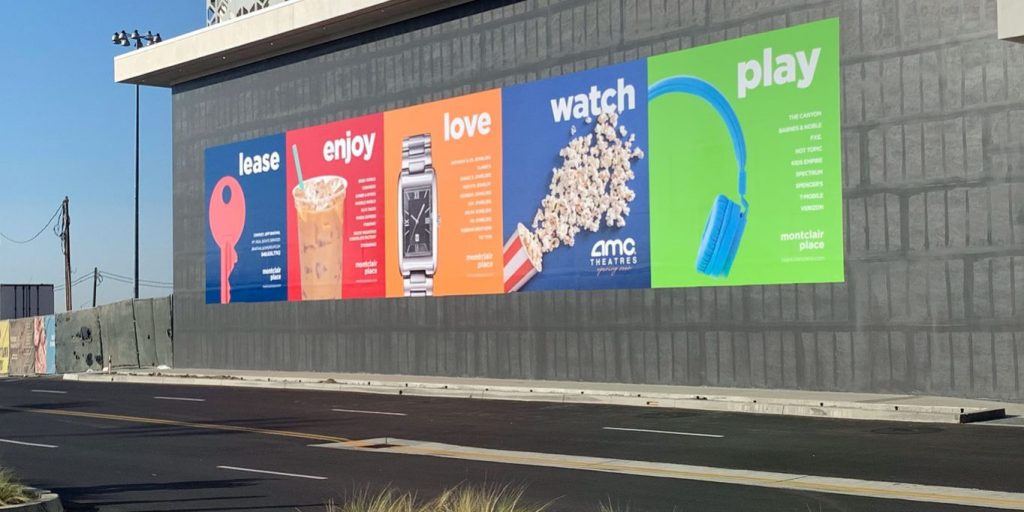
For most banner work the starting point is a water-based clear coating such as ClearShield, which is intended for water-resistant ink and media combinations, including solvent, eco-solvent, latex and UV inks. ClearShield is formulated with UV inhibitors, is described as non-yellowing and highly flexible, and spills clean up with soap and water.
Finish is partly a design choice and partly a practical one. Gloss, satin and matt are available; the higher the gloss, the greater the enhancement of the image, while matt reduces reflection where glare would be a problem. For banners in places at risk of tagging, Landor’s two-part anti-graffiti coating is supplied in gloss and is designed to be applied as a single top coat, so plan the build-up before you start. If you are unsure whether your ink set is compatible, coat a small offcut first.
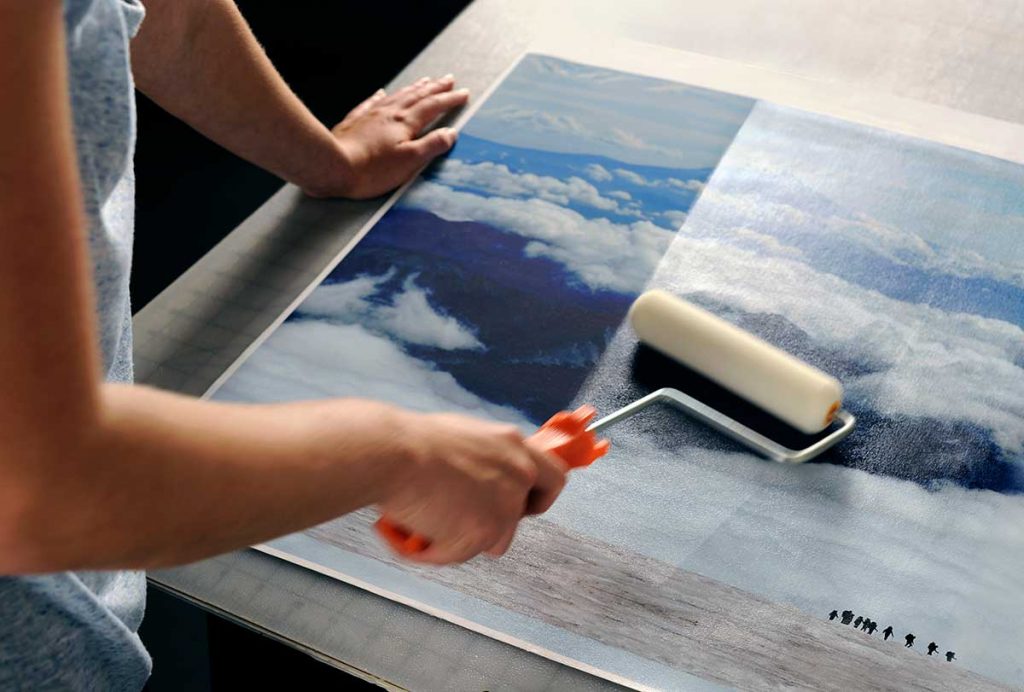
One of the practical strengths of liquid lamination is that it needs no capital equipment. A hand roller, brush, paint pad or spray equipment will all work, and the process has been compared to painting a wall with emulsion. Because the coating self-levels, roller edges should not leave lines as long as enough fluid is applied.
Size is not a barrier either. Landor’s guidance is that superwide banners can be hand coated at any size you can lay out on a floor or hang from a wall. A few habits help:
A liquid lamination starter kit is a low-cost way to test the method on your own media.
If coating becomes a regular part of production, a roll-to-roll machine gives more consistent coat weight and less handling. Landor’s water-based systems come in 1.6m and 3.3m widths, recirculate the coating to keep waste low, and can usually achieve up to 80m² per hour on the 1.6m width. Wider machines can be built to special order. For one-off projects, Landor also offers a coating service and short-term rental, which lets a sign maker take on a large banner job without buying equipment first.
Yes, in many cases. Liquid laminates can be applied to graphics already installed, as long as the surface is flat, clean and dry. Coating before installation is usually easier to control, but retrospective coating is a useful option when a banner is already up.
Landor’s guidance is that almost any material can be coated as long as it is not perforated. For perforated applications, film is generally the better choice, partly to stop dirt settling in the holes.
Landor recommends gloss where abrasion resistance is the priority. Satin still offers good abrasion resistance with less glare, and matt suits banners that must avoid reflection, although it may show abrasion marks sooner.
No coating stops fading entirely. A liquid laminate with UV inhibitors is designed to slow it, so the banner keeps its colour for longer than it would unprotected.
Call +44 1252 624411 or email info@liquid-lamination.co.uk for advice, samples and pricing.
