
+44 1252 624411 info@liquid-lamination.co.uk Water-based and UV liquid laminates · Inkjet sprays · Coating machines
Applications
Gyms and leisure centres clean their surfaces more often than almost any other public building, and their graphics have to survive it. Motivational walls, wayfinding, studio murals, soft play and inflatables all meet disinfectant, damp and physical knocks every day. The key to a coating that lasts in these venues is to specify it around the cleaning routine, not just the look of the print.

Landor’s article Do coatings resist disinfectants? names gyms alongside healthcare, care homes, transport hubs and schools as places where cleaning routines may change in response to infection-control requirements. That makes the facilities team’s cleaning specification the best starting point. Before choosing a coating, ask:
Alcohol-based products, quaternary ammonium compounds, hydrogen peroxide formulations and chlorine-based cleaners do not affect coatings in the same way, so the answers genuinely change the specification.
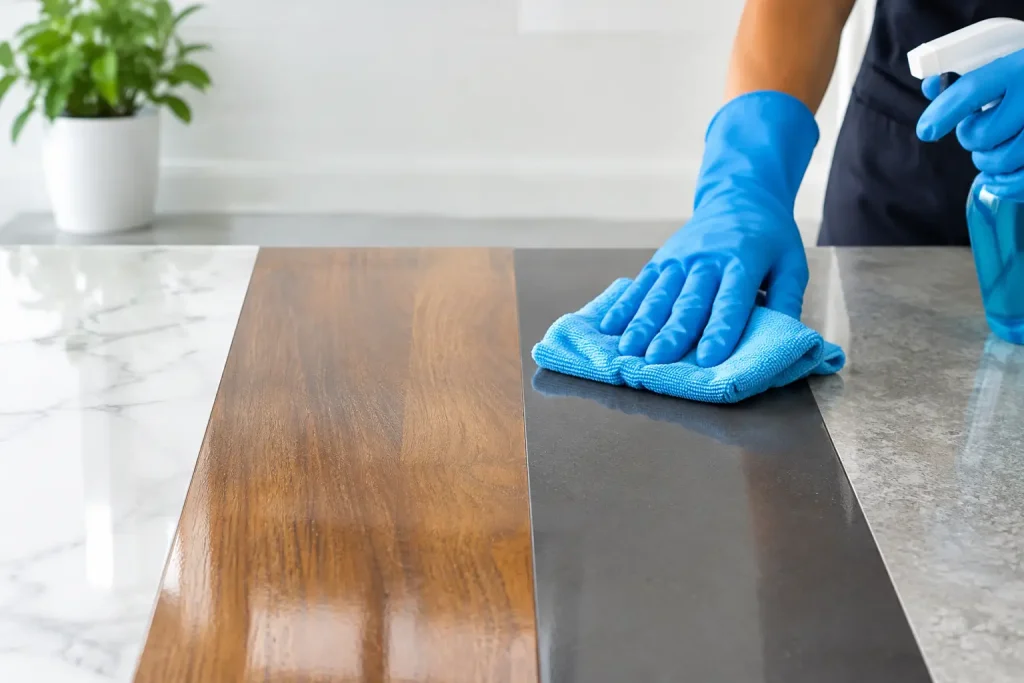
Wall graphics in a gym take a different kind of punishment from those in an office. Equipment is moved and leaned against walls, kit bags brush past and surfaces are wiped repeatedly through the day. In busy areas, Landor recommends a gloss finish where abrasion resistance is the priority; satin still offers good abrasion resistance with less glare, which can suit mirrored studios and bright lighting. Matt gives a neutral look but may show abrasion marks sooner.
Edges, joins and areas around fittings are often where problems start, because cleaning fluid can track into them. Avoid letting liquid pool at seams, and pay attention to edge coverage when coating. Landor’s general guidance on graphics in high-traffic areas is that a coated print can typically last around twice as long as an unprotected one in the same environment.
Many leisure centres include soft play areas or hire out inflatables. These are among the hardest-working printed products Landor coats. Landor’s soft play coatings are designed to form a flexible film that bends and compresses with foam and vinyl wraps, improve wipeability and help preserve colour. They are water-based and low-odour; Landor recommends standard ventilation during application and a full cure before use.
For bouncy castles and commercial inflatables, which face water, abrasion and handling, Landor recommends a gloss finish for the best overall protection and scratch resistance. In every case, good ink adhesion to the material and good coating adhesion to the print come first, so test on the actual material.
It is easy to treat these as one requirement, but they are separate. An anti-microbial finish, such as ColourShield Safetouch, tested to ISO 22196, is designed to help inhibit the growth of specified microbes on the coated surface. Disinfectant resistance is about whether the coating itself tolerates repeated chemical cleaning without softening, hazing or losing gloss.
In high-touch leisure environments, the strongest specification often considers both. Neither removes the need for routine cleaning, and Landor is clear that its anti-microbial coatings are intended to supplement normal hygiene procedures.

For a chain of gyms or a council leisure estate, a small test can prevent a large failure. Coat a sample of the production print, allow it to cure fully as the product data sheet specifies, then replicate the venue’s actual cleaning: same cleaner, same cloth, realistic dwell time and a meaningful number of cycles. Look for changes in gloss, colour, surface feel, softening and lifting at edges. Putting a newly coated graphic into heavy cleaning too soon can produce misleading failures, so respect the cure time before handover. Once the scheme is live, give the facilities team written care guidance covering the approved cleaner, dilution and cloth type, and recheck compatibility if a stronger product is introduced later.
Only once the coating has fully cured. A coating can feel dry well before it reaches its intended chemical resistance, so check the product data sheet for drying and curing guidance before the graphic goes into service.
Gloss gives the best abrasion resistance in Landor’s range. Satin is a good compromise where glare from lighting or mirrors is a concern.
Landor offers coatings designed for soft, flexible substrates such as vinyl-wrapped foam. Always test on a sample of your actual material to confirm adhesion and flexibility.
Call +44 1252 624411 or email info@liquid-lamination.co.uk for advice, samples and pricing.
