
+44 1252 624411 info@liquid-lamination.co.uk Water-based and UV liquid laminates · Inkjet sprays · Coating machines
Guide
Coating prints is not a high-risk job, but the risks depend heavily on the chemistry in the can. A water-based laminate on a hand roller asks for very different precautions from a solvent aerosol or an uncured UV-curable coating. This guide sets out the main points for each type and where to find the detail. It is general guidance: the safety data sheet for each product, and your own workplace risk assessment, always come first.

Every coating has a material safety data sheet (MSDS) setting out its hazards, the protective equipment needed, first aid, storage and disposal. Landor keeps a library of MSDS and will send them on request, as noted in the FAQ. Get the sheet before a new product goes into use, keep it where operators can find it, and use it as the basis of your risk assessment.
Make sure everyone who handles the coating, including temporary staff and installers who coat on site, knows what is in it and what to do if it is spilled, splashed or inhaled.
Water-based coatings such as ClearShield and ColourShield are the lowest-hazard option in the Landor range. They are low-odour, and spills and tools clean up with soap and water. Landor describes liquid lamination with water-based or UV-curable chemistry as usually not flammable. ColourShield is a ready-to-use system that needs no isocyanate hardeners, unlike traditional two-component coatings, which removes a mixing step and the handling that goes with it.
Low hazard is not no hazard. Sensible practice still applies:
Solvent coatings are needed for paper, dye inks and other water-sensitive prints, and Landor’s ClearJet and ColourJet aerosols fall into this group. They call for more care:
Aerosols are pressurised and solvent-based, so follow the warnings printed on the can. Details are on the ClearJet inkjet spray page.

UV-curable coatings are low in VOCs, but Landor’s comparison guide notes that some UV chemicals are hazardous before curing and can irritate skin and eyes. Operators need protective equipment against both chemical contact and UV light, and proper training is required for operation and safety. Handle uncured coating with gloves and eye protection as the data sheet specifies, and keep lamp shielding in place.
For any coating machine, follow the manufacturer’s operating instructions and the training provided. Landor supplies warranty and training with its ex-demo UV80 coater in the UK. The guide to choosing between UV-curable and water-based coatings compares worker-safety considerations side by side.
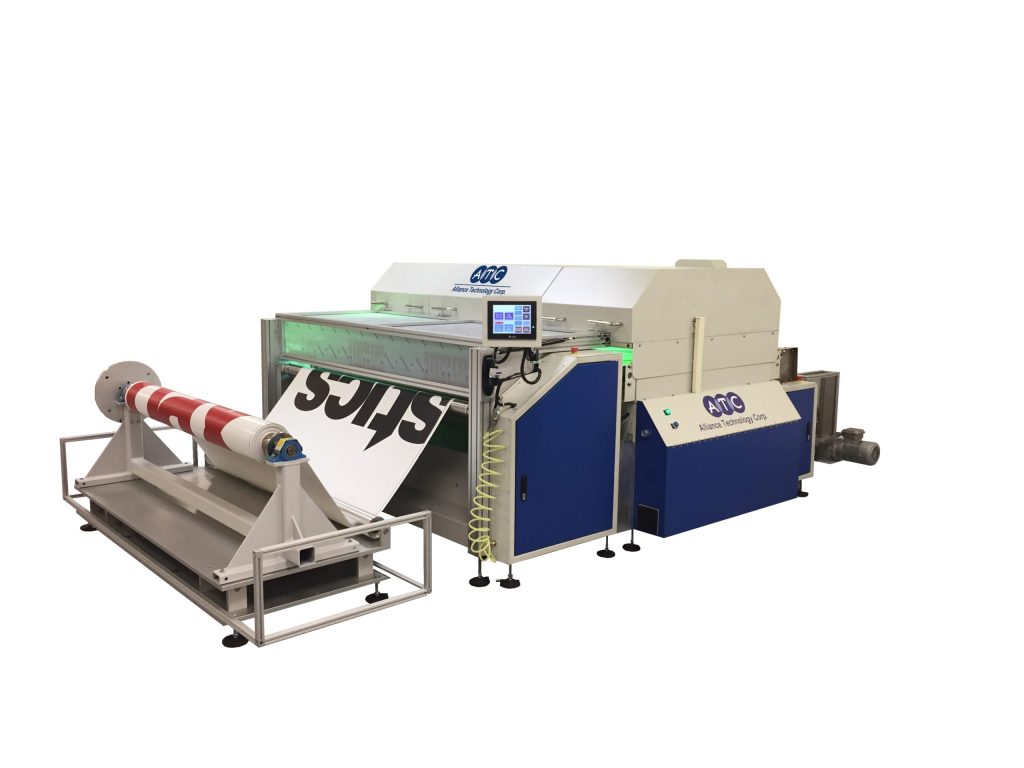
Clean tools and machines in line with the data sheet. Water-based coatings clean up with soap and water; solvent products need the cleaner the data sheet specifies. Landor’s comparison notes that UV lamps and filters need special disposal, while water-based waste can often be treated and disposed of more easily. Check local rules for disposal of coating waste, empty containers and aerosols.
Where graphics are coated on site, for example in a care home, school or office, let the coating cure fully before the area returns to normal use. Landor recommends standard ventilation during application and a full cure before use for its water-based coatings in soft play settings, which is a sensible rule for occupied buildings generally.
Landor holds a library of MSDS. Email your request and Landor will send the relevant sheet.
Landor advises excellent air circulation and a protective mask, especially when spraying many prints. Check the product data sheet for the type of protection.
Landor describes liquid lamination with water-based or UV-curable chemistry as usually not flammable. Always confirm with the specific product’s data sheet.
No. ColourShield is a ready-to-use water-based coating that does not need the isocyanate hardeners used in traditional two-component systems.
Call +44 1252 624411 or email info@liquid-lamination.co.uk for advice, samples and pricing.
