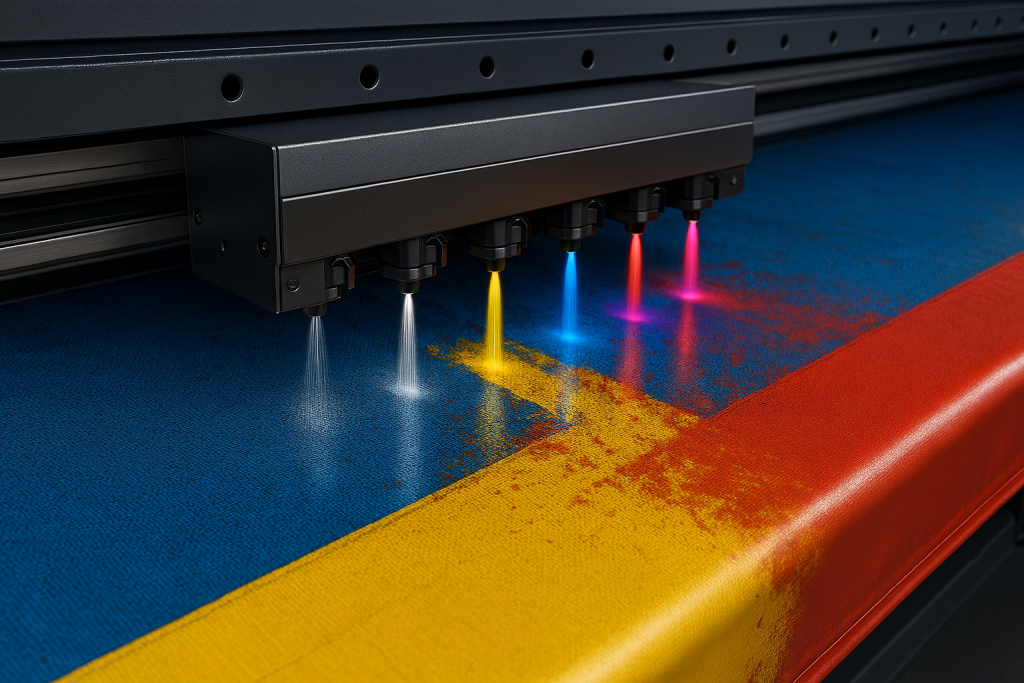
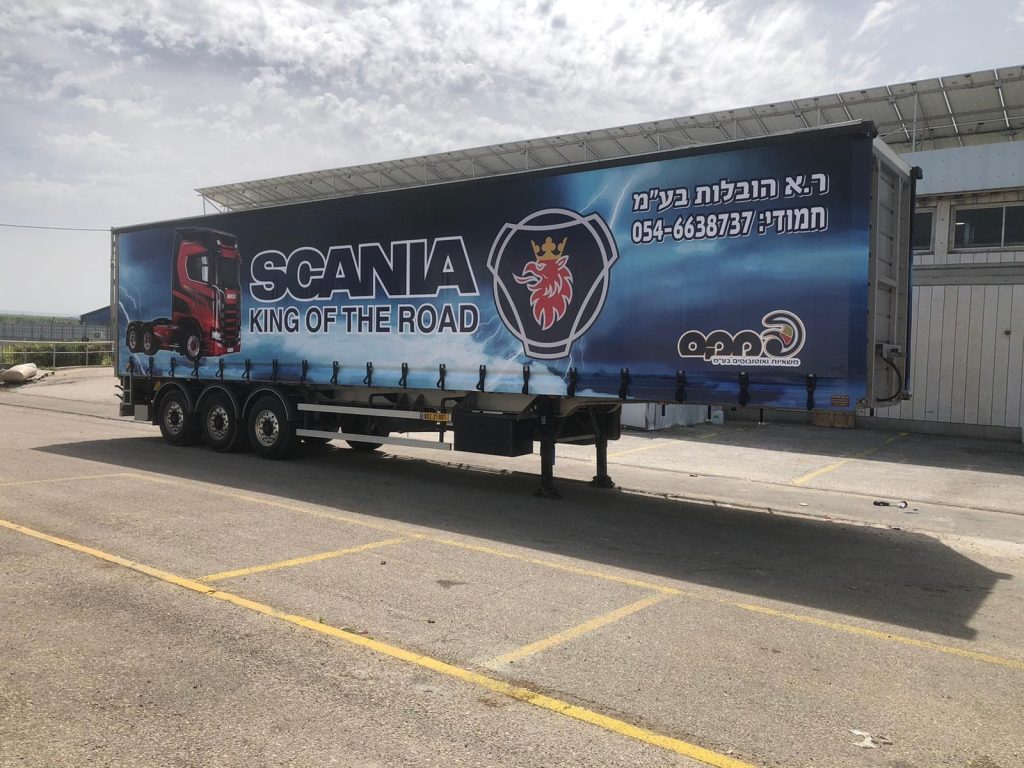
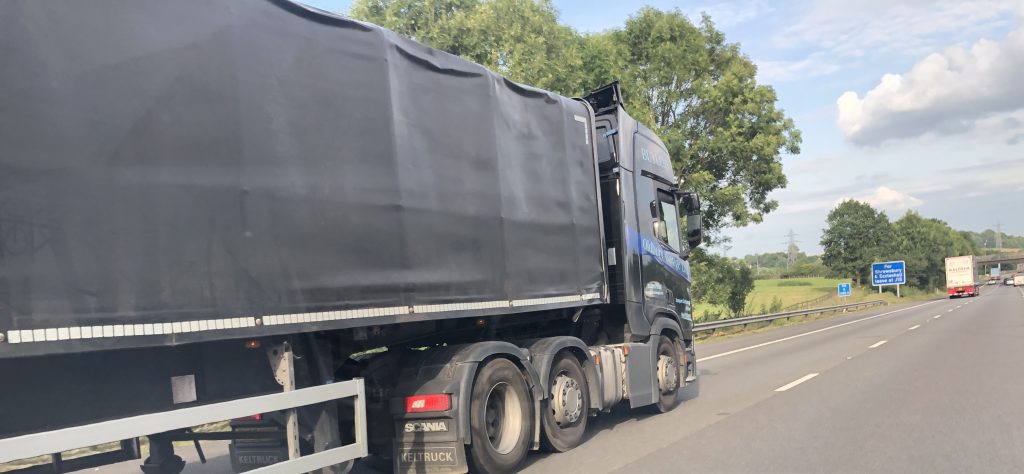
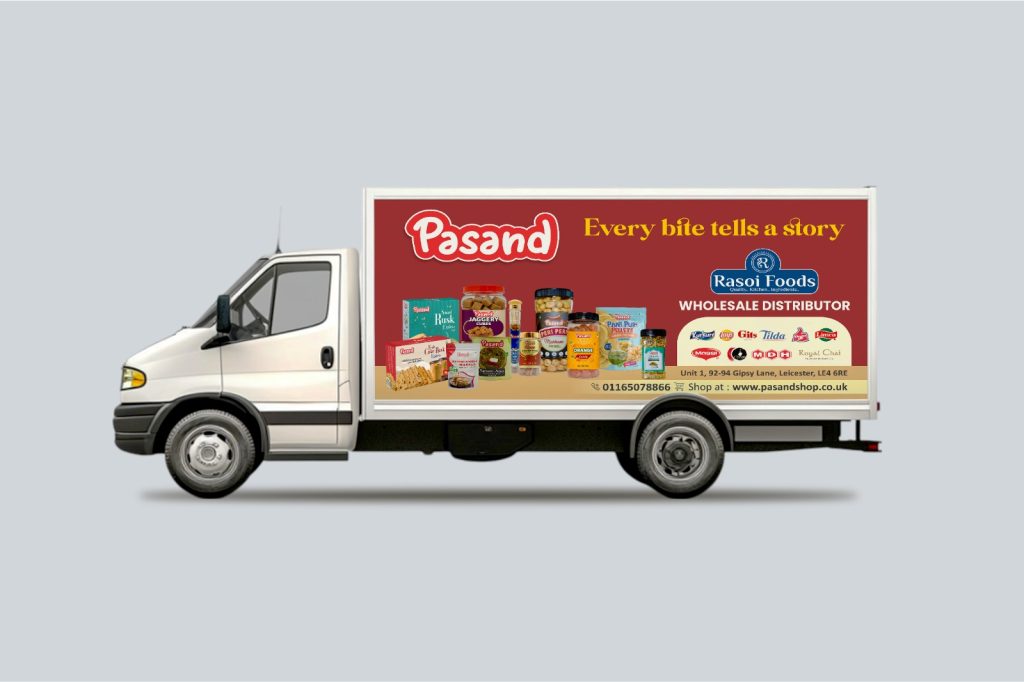
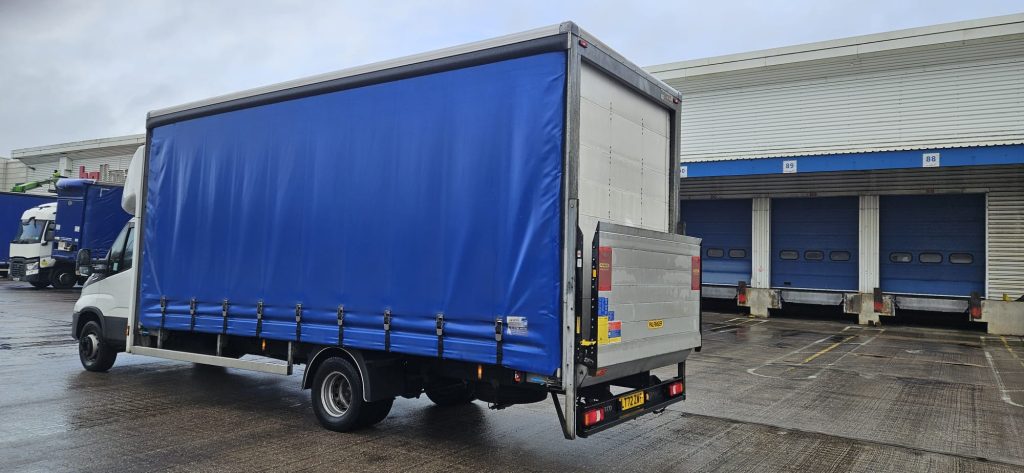
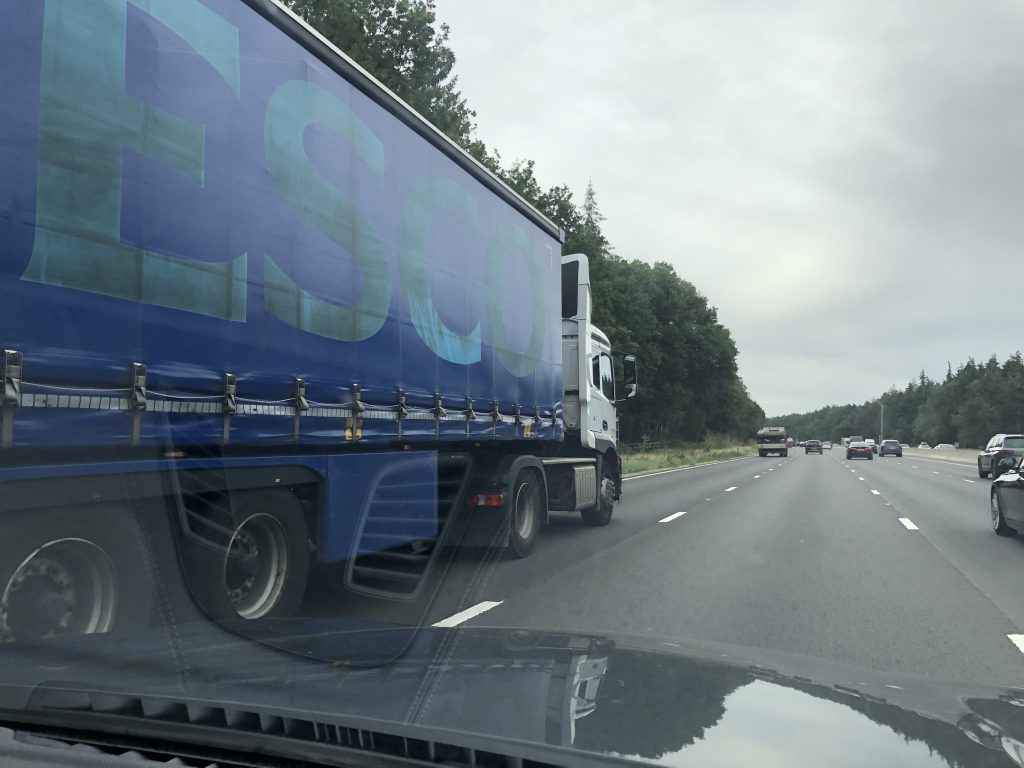
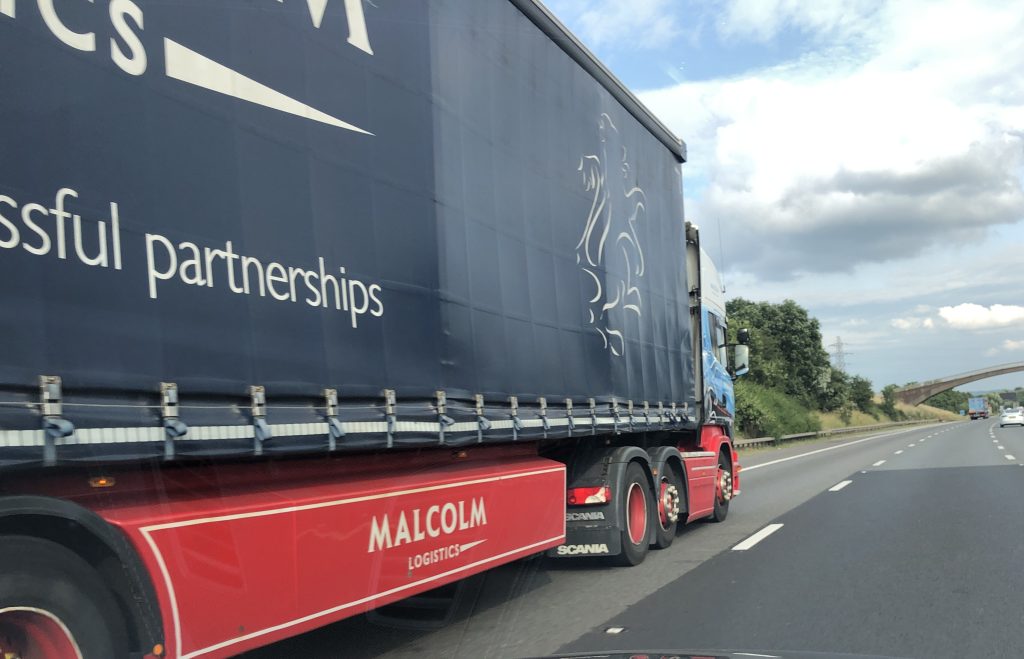
On digitally printed truck curtains, an inkjet printhead-applied varnish, a UV coating and a water-based coating differ significantly in chemistry, durability, flexibility, environmental impact, cost and long-term performance.
1. Inkjet printhead-applied varnish (UV)
UV inkjet varnish looks similar, once finished, to clear coatings, liquid lamination and lacquer.
Advantages
Precise application only where needed.
Can create spot gloss, matt, textured or raised effects (subject to printhead capabilities).
No additional finishing equipment required.
Usually applied at the same time as printing. Also good for decorative graphics and retail displays.
Disadvantages for truck curtains
Usually a very low coat weight.
Limited protection against abrasion.
Limited chemical resistance.
Can crack on highly flexible curtain-side materials.
Expensive coating chemistry.
Not designed primarily for heavy-duty transport applications.
Typical thickness
5–15 microns.
Best for
Indoor graphics.
Retail displays.
Decorative vehicle graphics.
2. UV liquid coating
A UV-curable acrylic coating applied by roller, spray, curtain coater or flood coating system, and cured using UV lamps.
Advantages
Excellent gloss levels.
High scratch resistance.
Fast curing.
Good chemical resistance.
Good weather resistance.
Disadvantages for truck curtains
Can become brittle over time.
Risk of cracking during repeated flexing.
May delaminate from some PVC curtain materials.
Higher energy consumption due to UV curing.
Coated materials are difficult to recycle.
Typical thickness
10–50 microns.
Best for
Rigid boards.
Signage.
Vehicle panels.
Applications needing short-to-medium flexibility.
3. Water-based acrylic coating
Applied by roller, spray, gravure, flexo or other coating systems, and dried using ambient or warm air.
Advantages
Excellent flexibility.
Better elongation characteristics.
Less cracking on folding curtains.
Lower VOC emissions.
Lower energy consumption.
Easier to formulate with anti-graffiti and anti-microbial additives.
Better sustainability profile.
Easier handling and storage.
Disadvantages
Longer drying times than UV.
Slightly lower initial hardness.
May require multiple coats for maximum protection.
Typical thickness
5–30 microns.
Best for
Truck curtains.
Tensioned fabrics.
Banners.
Flexible PVC.
Textile graphics.
Truck curtain application comparison
Truck curtains are subject to:
Constant flexing.
Folding.
Wind loading.
UV exposure.
Road salt.
Fuel splashes.
Cleaning chemicals.
Abrasion from straps and buckles.
For these reasons, flexibility is often more important than ultimate hardness.
Property
Inkjet varnish
UV coating
Water-based coating
Flexibility
Fair
Moderate
Excellent
Abrasion resistance
Fair
Very good
Good to very good
UV resistance
Good
Excellent
Excellent
Chemical resistance
Fair
Excellent
Good
Crack resistance
Poor
Moderate
Excellent
Sustainability
Moderate
Poor
Excellent
Repairability
Difficult
Difficult
Easier
Cost per m²
High
Medium
Low to medium
Suitability for truck curtains
Fair
Good
Excellent
What most truck curtain manufacturers prefer
Many fleet graphics suppliers and curtain manufacturers favour flexible acrylic coatings because they:
Move with the PVC fabric.
Resist cracking around folds.
Maintain image quality for longer.
Reduce the risk of coating failure.
Have a lower environmental footprint.
For digitally printed UV or latex truck curtains, a properly formulated water-based acrylic protective coating often provides the best balance of:
Durability
Flexibility
Weather resistance
Washability
Sustainability
Cost
This is one reason why specialist systems such as water-based acrylic protective coatings are increasingly used as an alternative to traditional UV varnishes where long-term curtain flexibility is critical.